

⚠️🌎 Montañas de carne: fósiles de barro, #nephilim y la tierra viviente olvidada Introducción: por qué el trabajo de Roger importa t.co/QkmTUBmjUo
PaulsCorner-VerseQuest@TNTJohn1717
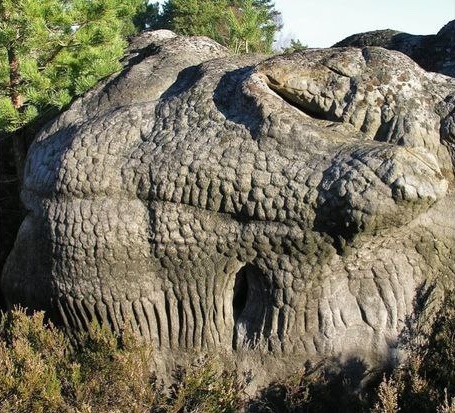
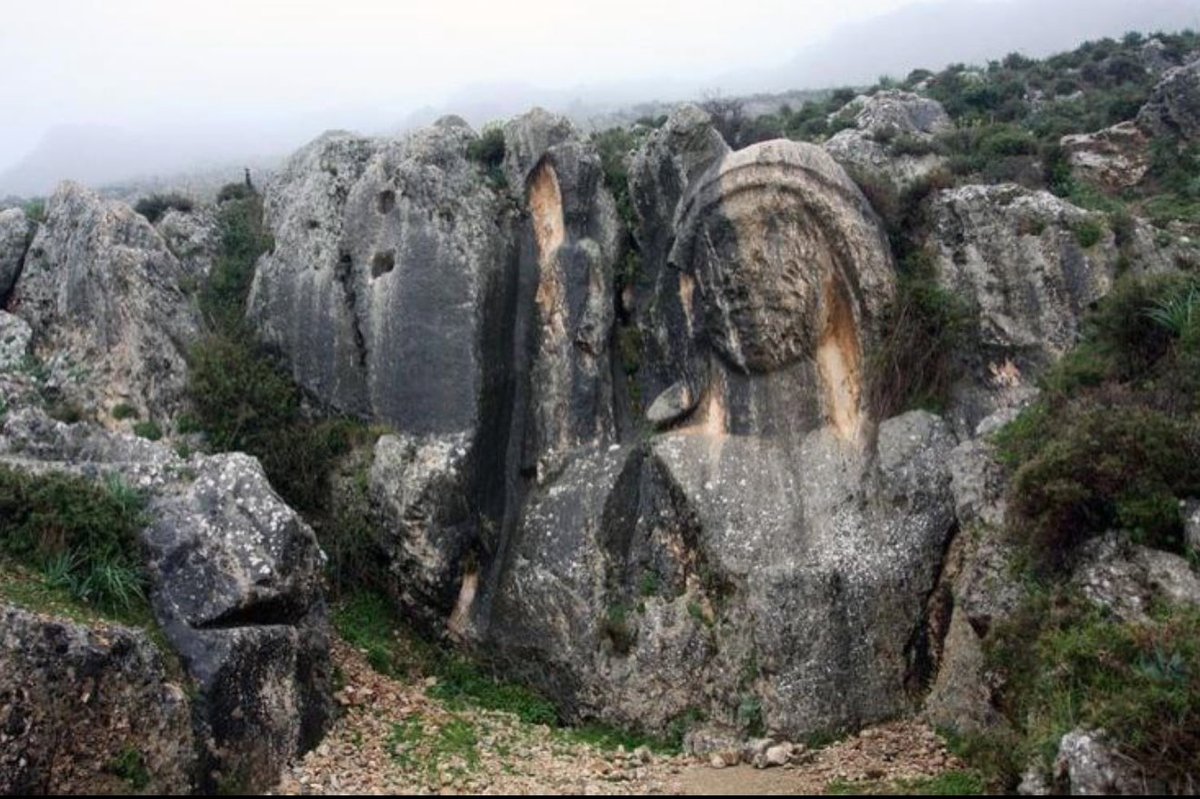
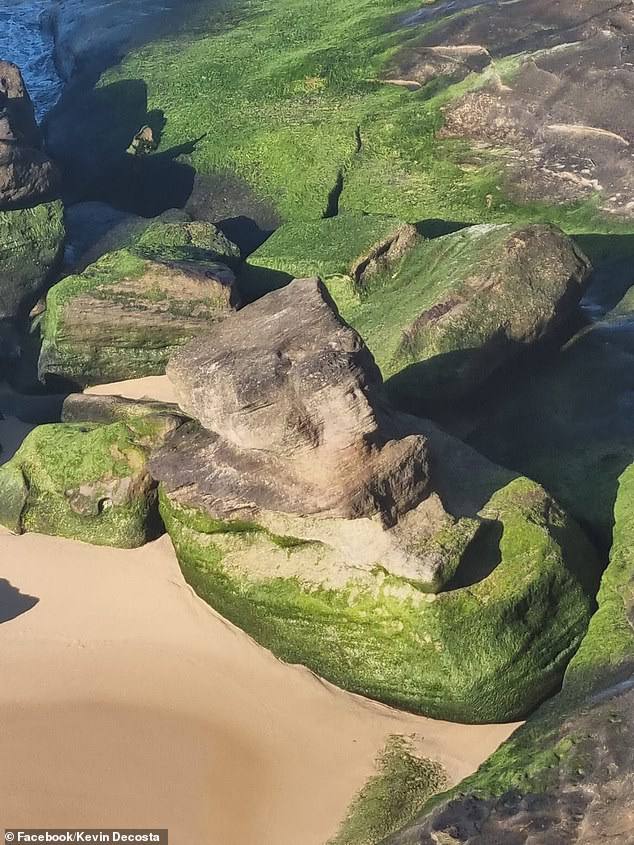
Mountains of Flesh: Mudfossils, Nephilim, and the Forgotten Living Earth Introduction: Why Roger’s Work Matters Family, today I want to share with you something that has stirred my thinking in a deep way. Roger from Mudfossils University has been putting out some of the most fascinating research that I’ve come across. Many of you know him already—he is bold, he asks the questions others are too afraid to ask, and he refuses to simply swallow the mainstream narrative. His latest work reminds us that what we have been told about this earth—that it is just a lifeless rock drifting through space, governed by cold mechanical forces—may be the biggest lie of them all. Instead, Roger proposes that the Earth itself is alive. That what we call mountains and ridges and valleys are not just accidents of geology, but the petrified remains of colossal beings. That earthquakes and magma flows are not merely tectonic plates grinding but the breakdown of ancient biological tissue, like decomposition happening on a scale we can barely comprehend. To some, that might sound fantastical. But when you put it side-by-side with the Bible’s account of the giants, the Nephilim, the judgments of God, the resets of history, and the “groaning” of creation itself, suddenly it all makes perfect sense. Today I want to give Roger credit for the brilliance of his observations, and then I want to expand on them through the lens of Scripture, the resets we’ve studied, and my own travels through this land. Together, we’ll peel back the layers of deception and ask: are we walking on the bones of giants? Are our mountains the tombs of the Nephilim? And what does that mean for us, right here, right now? Roger’s Core Arguments Let me begin by giving Roger his due. He has built his case patiently, pulling from both geology and mythology to show us a bigger picture. Here are some of the main pillars of his perspective. Earthquakes as Biological Events In his view, the recent Alaskan earthquakes, and many before them, are not random tectonic shifts. They are the signs of massive biological breakdown—colossal beings whose tissues are decomposing beneath our feet. He sees magma not as molten rock from some distant core, but as the liquefaction of titanic bodies. He even names some of these beings—Kaqualo for the Appalachians, Scorbzilla for the ranges out west. These are not simply poetic nicknames. They are his way of saying: what if this really was once flesh? Mountains as Anatomy Roger demonstrates how ridges, folds, and formations mirror anatomy. He points out feather-like structures in Appalachia, beard-like ridges, and even muscular and vascular features. To him, the earth is a frozen autopsy of creatures beyond imagination. Mythology as History Where mainstream academics dismiss Greek mythology as mere story, Roger sees memory. When the ancients spoke of Typhon, or titans battling gods, he argues these were coded accounts of real events—giant beings shaping the world and then perishing in cosmic battles. Myths are not fantasy, they are history blurred through time. Earth as a Living Organism Roger’s model treats the planet as a vast, living body. He compares underground channels to veins and nerves. He notes that “hot blobs” under the crust pulse like energy bursts, similar to biological ion channels. In his eyes, the Earth doesn’t just support life—it is life. Biology Beyond Earth He even connects this to outer space, pointing to the Bennu asteroid samples that contained organic molecules, DNA traces, and strange fibrous matter. To Roger, this is proof that colossal life—flesh on a cosmic scale—is not unique to Earth but part of a larger design. Critique of Science Perhaps most importantly, Roger calls out the sterility of mainstream geology. The plate tectonics model, he says, is too simplistic. It reduces the earth to mechanical accidents and ignores the biological patterns written in stone. Why won’t geologists at least consider that

- 1 réponses
- 3 partages
- 2 j'aime
- 954 vues