


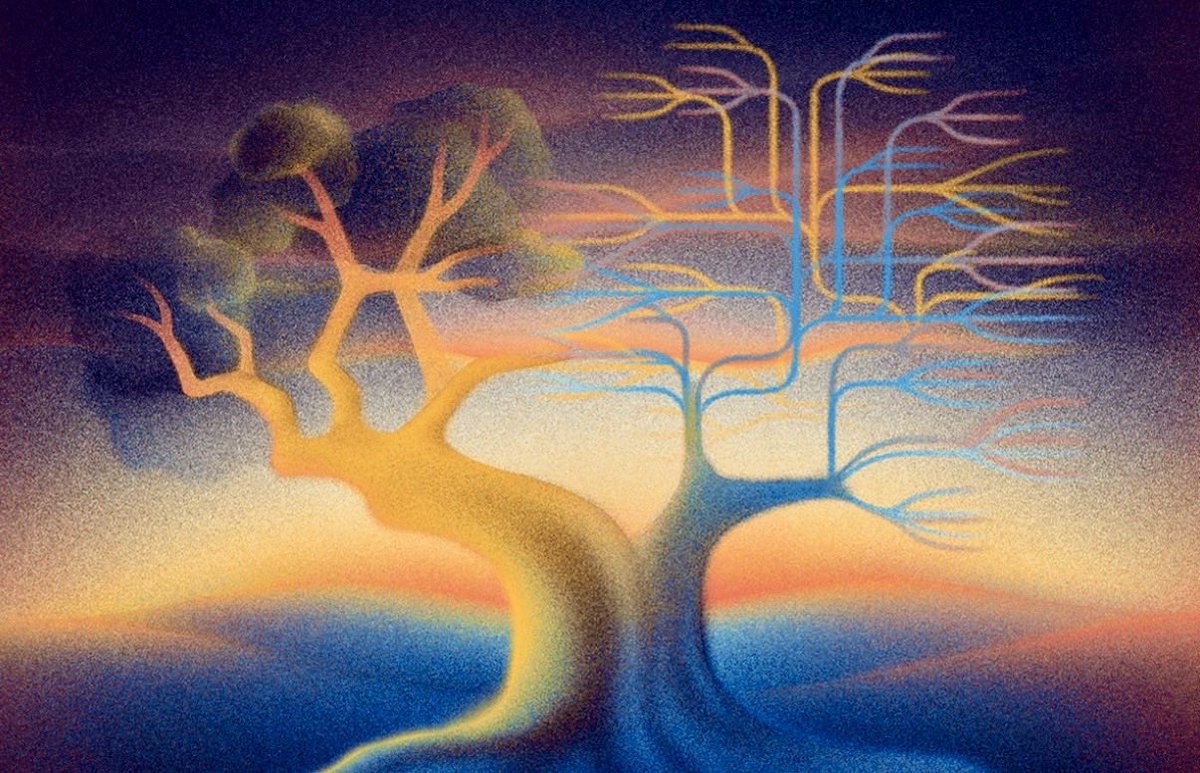
🧠 Neuroscience gave AI its start. What happens now? 🤖 Neuroscience helped launch AI, but David Sussillo, a computational neuroscientist, believes its next major contribution may take longer than many expect. Meanwhile, AI is becoming a powerful tool for studying the brain. Central points: 📍The fields have diverged: modern AI increasingly advances through engineering rather than biological insights. 📍Neuroscientists still have valuable expertise: their methods can help investigate AI’s internal workings and behavior. 📍Timescales matter: he doubts brain research will redirect AI within five years, but anticipates potentially important contributions over 10–20 years. 📍A possible bridge: large models built from high-quality neural recordings could enable experiments that are difficult in living brains. Note: This remains a proposed direction. By @TheTransmitter #Neuroscience #AI #Future 👉t.co/vpogk5CeKQ @Khulood_Almani @Shi4Tech @jblefevre60 @dinisguarda @Eli_Krumova @BroadenView @HaroldSinnott @ThEiLe0 @Mack1510019 @drsharwood @EvanKirstel @ahier @RLDI_Lamy @Timothy_Hughes @Ym78200 @Nicochan33 @mvollmer1 @jeancayeux @rvp @SusanFourtane @amalmerzouk @bamitav @Fabriziobustama @FrRonconii @domingonarvaez1 @c4trends @TerenceLeungSF @aure79lien @EstelaMandela @NevilleGaunt @stanleywaite1 @pchamard @corixpartners #Brain #NeuroAI #Megaphysics Entwined histories: In the short term, AI may help neuroscience, but in the long term, neuroscience may still unveil secrets for AI. Illustration by Andreea Jurj
- 6 réponses
- 22 partages
- 35 j'aime
- 1 072 vues